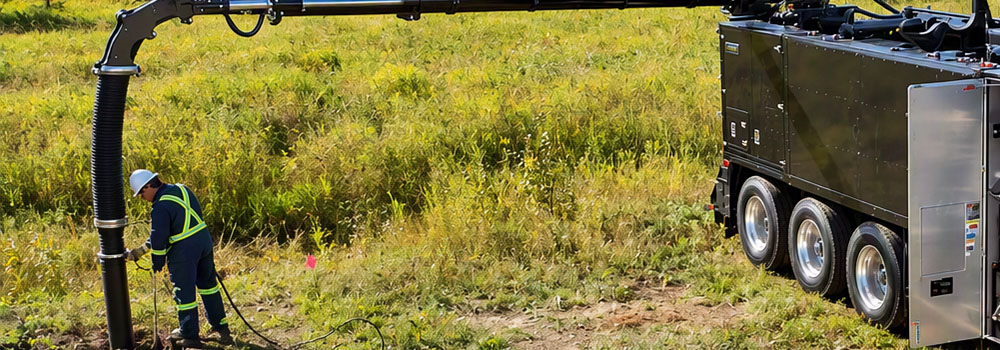
Digging near underground utilities is one of the riskiest parts of any job. A single wrong move with a backhoe can rupture a gas line. It can sever fiber-optic cable or collapse a trench wall. Beyond utility strikes, traditional mechanical digging also puts crews and sensitive surroundings at risk.
Hydro excavation offers a precise, nondestructive alternative. This method uses pressurized water and a vacuum to excavate. The result is a controlled dig that exposes what’s underground without the guesswork associated with a mechanical bucket.
Find out how hydro excavation works and how it protects crews and utilities. We’ll also look at how this technique can help you complete projects faster.
Jump to Section:
- How Hydro Excavation Works
- The Safety Benefits of Hydro Excavation
- The Time-Saving Benefits of Hydro Excavation
- Is Hydro Excavation Worth the Higher Cost?
- Rent a Hydrovac Trailer From MacAllister Rentals
How Hydro Excavation Works
Hydro excavation, also called vacuum excavation or hydrovac, is a minimally invasive digging method that pairs high-pressure water with a powerful vacuum. The pressurized water breaks up soil into a loose slurry. A vacuum then pulls that slurry into a debris tank mounted on the hydro excavation truck or trailer. The debris tank holds the slurry until it’s hauled away for disposal. This water-and-vacuum combination gives operators tight control. An operator can choose exactly where and how deep to dig.
Types of Hydrovac Equipment
Hydro excavation equipment comes in a few different setups. Some crews use a truck-mounted hydroexcavator. Others rely on trailer-mounted units towed behind a separate vehicle. Both styles use the same core water-and-vacuum process, just packaged differently for different job needs. The right choice comes down to job size, site access and how often the equipment needs to move.
Hydrovac equipment also varies in terms of debris tank size, boom reach, vacuum power, water tank size and water pressure. For example, you can choose between a 500-gallon or 800-gallon vacuum excavator. Larger tanks mean fewer trips to empty the debris on bigger jobs.
Water pressure matters too. Higher pressure digs faster, but it raises the risk of hitting nearby utilities. In contrast, it takes longer to dig using low pressure, but it keeps that risk to a minimum. Most crews adjust pressure based on how deep they need to dig and how close they’re working to a known utility line.
Vacuum systems come in two main types. A fan-based vacuum handles light debris well for shallower, small-scale digs. A positive displacement (PD) blower can pull wet or heavy slurry over longer distances. That makes it a better fit for excavating deeper digs or wetter soil.
Common Applications
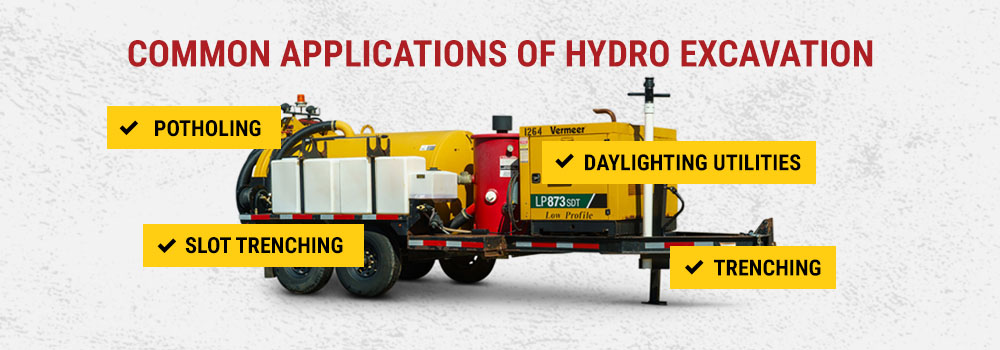
Hydro excavation’s precision makes it useful anywhere crews need to expose or work around buried utilities.
- Potholing: Potholing is the process of digging a small, targeted hole to confirm the exact location and depth of a utility line. Hydro excavation works well here. The pressurized water exposes the line without contact, unlike a shovel or backhoe that could strike it.
- Daylighting utilities: Daylighting means exposing a buried utility to the surface to allow crews to confirm its position. Hydro excavation handles this task cleanly. The water and vacuum remove the surrounding soil without disturbing the line itself.
- Slot trenching: Slot trenching involves cutting a narrow trench along a planned utility route, often to install a new line close to existing infrastructure. Hydro excavation keeps the cut precise, which helps crews avoid damaging nearby lines.
- Trenching: Trenching is a large-scale excavation used to lay pipe, cable or other utility lines across a jobsite. Hydro excavation protects nearby infrastructure throughout the dig, even as the trench grows longer and deeper.
These applications turn up across several industries. Utility installation, road construction, general construction, landscaping, oil and gas work and municipal projects all rely on the precision hydro excavation provides.
The Safety Benefits of Hydro Excavation
Safety is the top reason many contractors and municipalities consider hydro excavation. Traditional mechanical digging near buried infrastructure introduces significant risks. Hydro excavation is built to reduce those risks in several ways.
Protection of Underground Utilities From Strikes
Underground utilities cause serious problems when they’re damaged. Several types are especially high-risk on a typical jobsite:
- Gas lines: A strike can trigger a leak or explosion, putting crews, nearby structures and the surrounding community in immediate danger until crews contain the leak.
- Electrical conduits: Contact can cause outages, arcing or serious injury to anyone nearby before power can safely return.
- Water mains: A ruptured main can flood the site and shut down service to homes and businesses for hours at a time.
- Fiber-optic cables: Damage disrupts internet and phone service for entire neighborhoods or business districts and often takes longer to repair than other utility types.
- Sewer lines: A break can lead to costly cleanup and a potential health hazard if left unaddressed.
- Telecommunications infrastructure: Cutting a line can knock out service across a wide area, drawing complaints and steep repair costs for the contractor responsible.
A backhoe operator can’t see what’s underground. That blind spot is exactly why mechanical digging near these utility types poses such a high risk. One wrong scoop can turn a routine dig into an emergency.
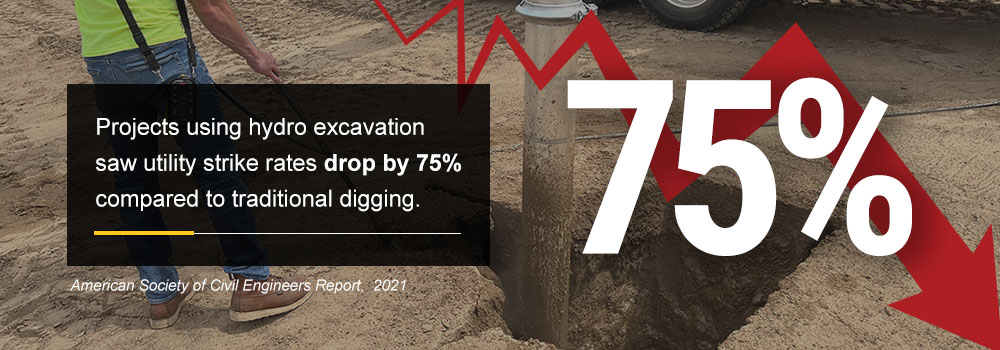
Hydro excavation changes the equation. The pressurized water stream is controlled and directional. This control means hydro excavation exposes buried lines without the blunt force of a mechanical bucket. That precision translates directly into fewer strikes. According to a 2021 report cited by the American Society of Civil Engineers, projects using hydro excavation saw utility strike rates drop by 75% compared to traditional digging.
The stakes go beyond repair costs. Hitting utilities like gas lines can also trigger an investigation leading to fines, penalties and reputational damage. It is often a reportable incident with the Pipeline and Hazardous Materials Safety Administration (PHMSA). This federal agency tracks excavation damage as one of the top causes of pipeline safety incidents nationwide.
Reduced Risk of Cave-Ins and Trench Collapses
Trench collapses are more dangerous than they might look. A single cubic yard of soil can weigh more than 3,000 pounds. That weight is enough to crush or trap a worker in seconds.
Traditional excavation often requires workers to enter or work beside an open trench. Hydro excavation reduces or eliminates that need during the exposure phase. The vacuum system removes soil without requiring anyone to climb inside the trench. That difference alone removes one of the most dangerous parts of a traditional dig.
The Occupational Safety and Health Administration (OSHA) maintains a national emphasis program on trenching. Based on OSHA’s enforcement data, worker deaths in trench collapses dropped nearly 70% between 2022 and 2024. This decline shows that the right technique and equipment choices can make a real difference on the jobsite.
Limited Damage to the Environment
Traditional mechanical excavation often disturbs more soil than necessary, and overdigging is common. The extra disruption can damage nearby landscaping, pavement, tree roots and drainage systems.
Hydro excavation keeps the footprint small. The slurry gets vacuumed up and contained rather than scattered across the site. Thanks to the precise digging and containment, hydro excavation minimizes soil disruption and waste in numerous settings.
- Landscaped areas: Careful digging protects grass, gardens and irrigation systems from needless damage.
- Paved roads: Precise digging reduces the amount of pavement that needs to be cut and patched, which shortens the time a road or lane stays closed to traffic.
- Tight urban environments: Hydro excavation works well in tight spaces and prevents overdigging, which is costly and disruptive to nearby structures and foundations.
- Waterways: Controlled excavation lowers the risk of runoff or sediment reaching nearby water sources.
- Other sensitive areas: Wetlands, protected soil and similar zones are often subject to stricter rules that may require the use of hydrovac equipment.
The Time-Saving Benefits of Hydro Excavation
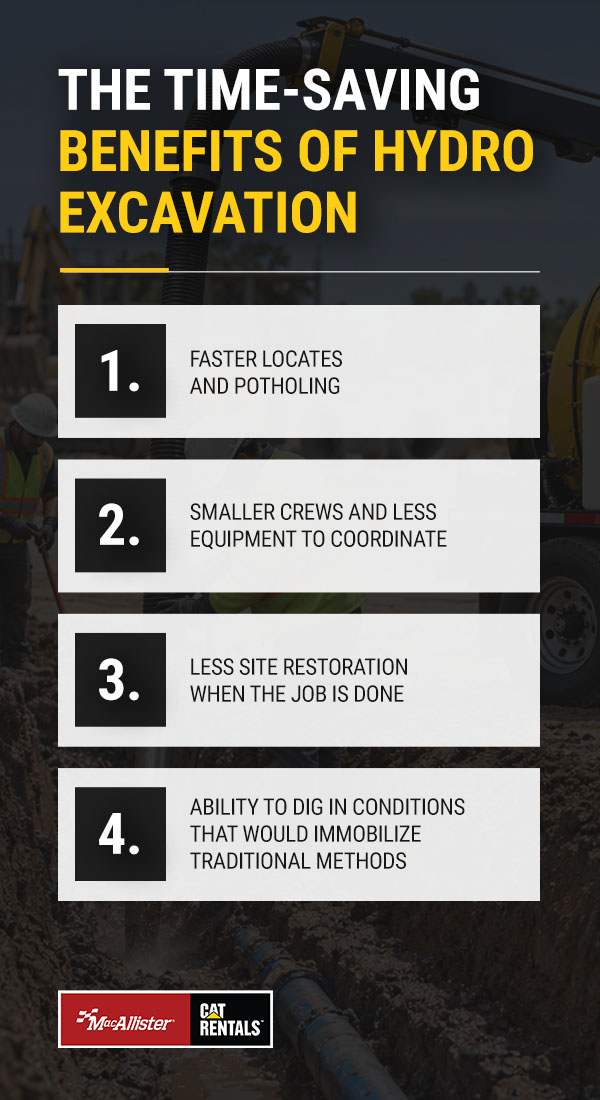 Delays cost money in ways that go beyond the day rate. A missed deadline can mean rescheduled crews or contract penalties on government jobs. Hydro excavation addresses some of the biggest sources of delay on utility jobs.
Faster Locates and Potholing
Potholing is one of the most time-consuming pre-dig tasks on any utility project. When excavating with a backhoe or by hand, potholing is also risky. The process often requires multiple rounds to get right. Each failed attempt adds hours to a schedule that’s often already tight.
Hydrovac equipment speeds this process up considerably. Pressurized water exposes the utility without contact, and the vacuum immediately removes the loosened soil. Potholing that might take hours with traditional digging can often be completed in minutes with hydro excavation instead.
Faster locates also reduce rework time from accidental utility strikes. One strike with a backhoe can shut down an entire site for hours or days. Avoiding that outcome is its own time savings, on top of the hours saved during the locate itself.
Smaller Crews and Less Equipment to Coordinate
A traditional utility dig requires a full team of workers. Equipment operators, spotters, hand diggers and safety monitors all have to work the active zone at once. Getting everyone’s schedule to line up takes effort on its own.
Hydro excavation can cut that team down to two people on some jobs. Fewer people on-site keep daily labor costs down and give a project manager fewer schedules to juggle. A smaller crew also brings less equipment to the site. Fewer trucks parked nearby make access easier and reduce traffic control needs.
For contractors already stretched thin by labor shortages, a leaner crew is a real advantage. Fewer people are needed to staff each job, freeing up workers for other projects.
Less Site Restoration When the Job Is Done
One hidden cost of traditional mechanical excavation shows up after the dig ends. Restoration work often includes:
- Backfill: Replace the soil removed during excavation, often bringing in additional material to restore the original grade.
- Compaction: Compact the backfilled soil to a stable density to ensure proper settlement.
- Surface repair: Repair any surface damage caused by excavation, including cracked concrete and disturbed gravel or soil.
- Pavement patching: Repair cuts made in roads, driveways or parking areas so the surface matches the surrounding pavement.
- Landscaping restoration: Replant or repair lawns, gardens and other disturbed areas to restore the property.
The more ground disturbed during the dig, the more work it takes to put everything back. Hydro excavation removes only what’s needed. This precision leaves the surrounding area intact, which keeps the restoration phase short.
This shorter restoration phase is a real time and cost advantage. It matters most for contractors working on road construction, landscaping or utility installation in built-up areas. Every hour saved on restoration is an hour a crew can spend on the next job, which adds up fast across a full project schedule.
Ability to Dig in Conditions That Would Immobilize Traditional Methods
Frozen ground is often difficult to work with using traditional excavators. In contrast, hydro excavation equipment with heated water systems can efficiently cut through frozen soil. This capability keeps projects on schedule even in regions where the ground freezes for several months a year. Avoiding a seasonal shutdown can mean the difference between finishing on schedule and losing months of progress to weather.
Similarly, some sites are too small or remote for any large equipment to access. Specialized hydrovac hoses can run hundreds of feet from the equipment. This reach allows the trailer to remain on a road or at an access point while crews work in a confined space. There’s no need to clear a path for heavy equipment, saving setup time in addition to the dig itself.
Is Hydro Excavation Worth the Higher Cost?
A hydrovac day rate typically runs higher than a backhoe or excavator rate. On paper, that makes traditional digging look like the cheaper option.
The day rate only tells part of the story, though. A backhoe crew that strikes a utility line loses far more than the money saved on equipment. Emergency repairs, project delays and cleanup costs can quickly outpace any savings made up front.
Hydro excavation also needs fewer people on-site and leaves less to restore once the dig is done. Those savings show up in the project budget, even if the daily rental rate is higher than that of traditional equipment.
A utility strike with a backhoe can trigger major emergency repair costs. It can also cause a service outage affecting dozens or hundreds of nearby people. Both scenarios pose a serious liability risk to the contractor responsible for the job. For work near sensitive utilities, hydro excavation often pays for itself simply by avoiding a single bad outcome.
Renting the equipment makes it easier to find out. You can bring in hydrovac equipment for a single job or an entire season to gauge its impact on your operations.
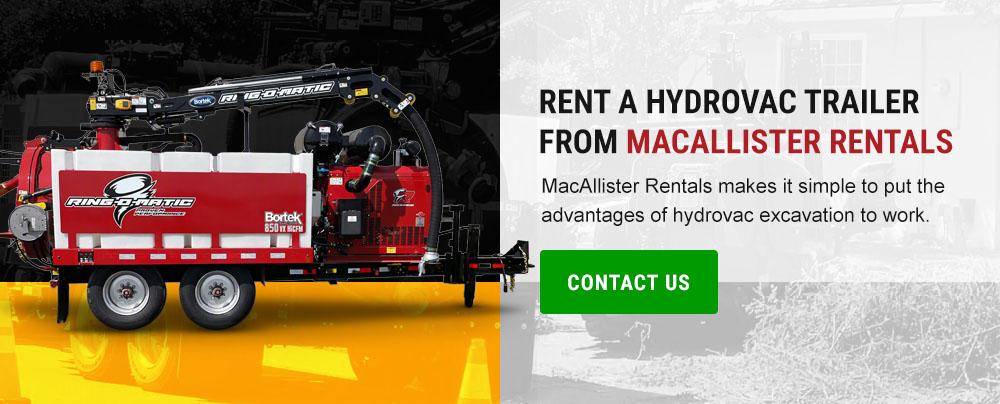
Rent a Hydrovac Trailer From MacAllister Rentals
Hydro excavation protects underground utilities from costly strikes and cuts the risk of cave-ins. It also shortens the time crews spend on locates and restoration. These gains accumulate and lead to safer jobsites and faster project completion than traditional digging methods. For contractors and project managers ready to try this method, the next step is getting the right gear on-site.
MacAllister Rentals makes it simple to put the advantages of hydrovac excavation to work. For over 80 years, we have supported contractors, landscapers and project managers with reliable equipment and unparalleled customer service.
Ready to see what a hydrovac trailer rental can do for your next project? Check availability at one of our locations in Indiana and Michigan’s Lower Peninsula, or contact us online to get started.
Frequently Asked Questions
What is hydro excavation?
Hydro excavation is a nondestructive digging method that uses pressurized water to loosen soil and a vacuum to remove it into a debris tank. Also called hydrovac or vacuum excavation, it gives crews more control when digging around underground utilities or in sensitive areas.
How does hydro excavation help protect underground utilities?
Hydro excavation exposes buried lines with a controlled stream of water instead of a mechanical bucket. This reduces the chance of striking gas, electrical, water, sewer, fiber-optic, or telecommunications lines. Crews should still follow utility-locating procedures and adjust water pressure to the site conditions.
What is hydro excavation used for?
Common uses include potholing, daylighting utilities, slot trenching, and trenching near existing infrastructure. Contractors also use it for utility installation, road construction, landscaping, oil and gas work, and municipal projects where precise digging can help limit disruption.
Can hydro excavation be used in frozen ground?
Yes. Hydro excavation equipment with a heated water system can loosen frozen soil, allowing some excavation work to continue in cold conditions. Suitability depends on the equipment, soil, site access, and project requirements.
Is hydro excavation more expensive than traditional digging?
Hydro excavation often has a higher day rate than a backhoe or excavator, but the equipment rate is only part of the project cost. A precise dig can reduce the risk of utility damage, minimize the amount of soil and surface that needs restoration, and require a smaller crew on some jobs. Compare the full project costs and risks when choosing a method.