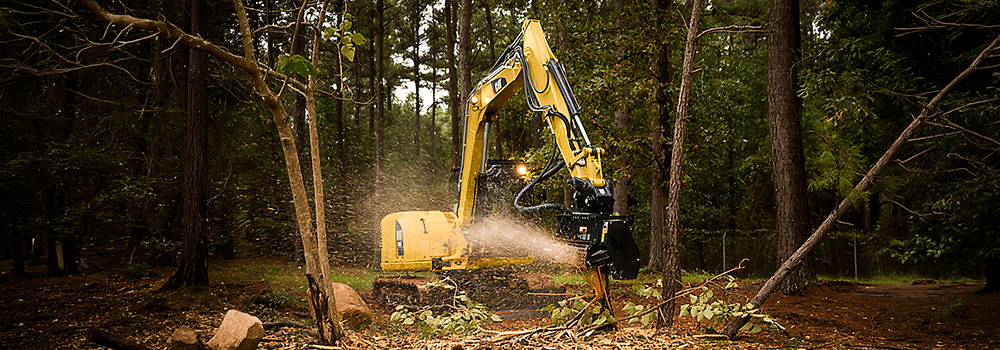
You can rent a forestry mulcher from equipment rental companies. These attachments help grind trees, brush and stumps into mulch. Nonetheless, knowing where to rent only answers part of the question. The bigger question is whether renting is the right move for your particular project.
The best choice depends on several factors, including your site conditions and how long the job will run. It also depends on your budget and whether your crew already knows how to use the equipment. Additionally, a one-day cleanup calls for a different approach than a multi-week land-clearing project.
This guide covers what a forestry mulcher is used for. It also shows how to match the right attachment to your job. You’ll also learn what rental costs typically look like and how renting compares to hiring a mulching contractor. By the end, you’ll have a clear framework for the decision ahead, whether you’re managing a timeline or looking to protect your margins.
What is a Forestry Mulcher Used For?
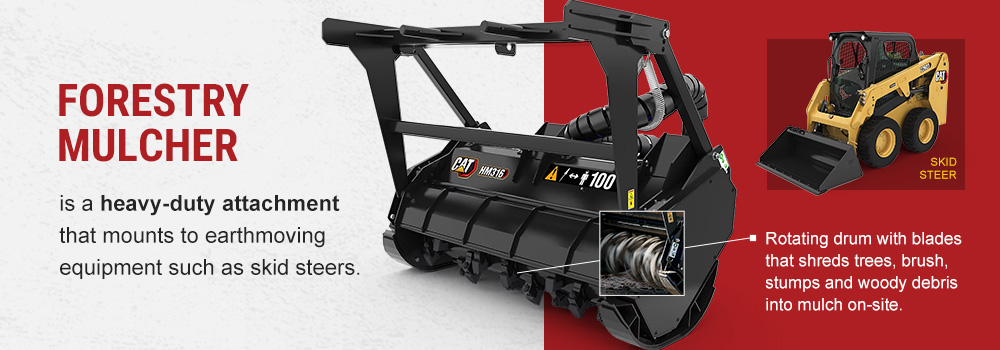
A forestry mulcher is a heavy-duty attachment that mounts to earthmoving equipment such as skid steers, compact track loaders (CTLs) or small or medium excavators. A rotating drum with teeth or blades shreds trees, brush, stumps and woody debris into mulch on-site. The whole process happens in a single pass, eliminating the separate haul-away step.
Forestry mulching offers many benefits that appeal to property owners and contractors. For instance, the single-pass operation of mulchers eliminates an entire layer of logistics for those juggling tight schedules. Having fewer moving pieces on a jobsite also means fewer chances for delays.
Site Preparation and Land Clearing
A forestry mulcher is an effective site-prep tool for homebuilding, commercial construction or land reclamation. Clearing a lot the traditional way involves cutting vegetation, loading it and hauling it away. It often runs through a separate chipper as well, adding equipment, labor and time to the job. A forestry mulcher handles all of that in one pass across the site. That consolidation can shave days off a site prep schedule. The exact savings depend on the size and density of the parcel.
The mulch layer left behind also does some of the work for you. It helps control erosion and runoff after heavy rain and retains soil moisture across the graded area. It also returns organic material to the ground. Organic material builds soil health for whatever comes next, whether a foundation pour or new landscaping. This makes a forestry mulcher a strong fit for a range of site conditions, from light brush to heavy vegetative cover. Both residential lots and larger commercial parcels can benefit.
Vegetation Management and Invasive Species Control
Beyond one-time land clearing, a forestry mulcher supports ongoing vegetation management. Landscaping crews and land managers rely on this equipment for handling recurring overgrowth across a property. It controls brush regrowth and clears invasive species that spread quickly if left unchecked. It also helps reduce fuel loads across a site, an important factor in areas prone to wildfire risk.
Moreover, the mulch layer left on-site suppresses brush and weed regrowth after the pass. This suppression reduces the intensity of the next round of maintenance. Over time, a property can shift from constant upkeep to occasional touch-ups. For crews managing recurring overgrowth, that follow-up savings adds up across multiple seasons. It also frees up crew time for other jobs on the schedule.
Right-of-Way and Roadside Maintenance
Utility corridors, road rights-of-way and fence lines all call for careful, selective clearing. Forestry mulchers can work close to structures and utility lines without disturbing the surrounding ground. Selective clearing also helps preserve desirable vegetation while removing what’s actually in the way.
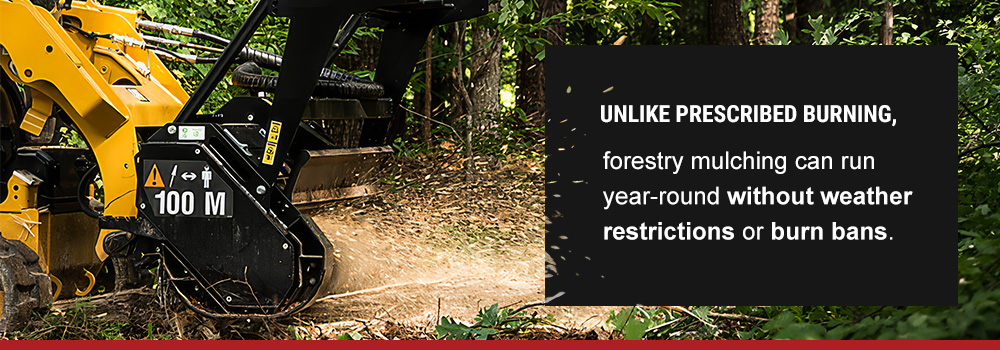
Unlike prescribed burning, forestry mulching can run year-round without weather restrictions or burn bans. For project managers juggling tight timelines, that reliability keeps jobs on track. Weather delays and seasonal restrictions become less of a concern.
Which Forestry Mulcher Attachment is Right for Your Job?
Skid steers, compact track loaders and excavators rank among the most common carriers for forestry mulcher attachments. Tractors and other equipment can handle the job too.
Choosing between a skid steer and a small or medium excavator comes down to your site conditions and production goals. Each one is built to thrive under a different set of circumstances. Knowing which conditions favor which setup saves time before the job starts.
Skid Steer Mulcher Attachments
A skid steer loader mulcher attachment mounts on the front of the equipment. It draws power from the carrier’s hydraulic system to run the cutting mechanism. This setup performs best on flat to gently rolling terrain. Your operator can drive straight through the work area at a steady pace, covering ground efficiently.
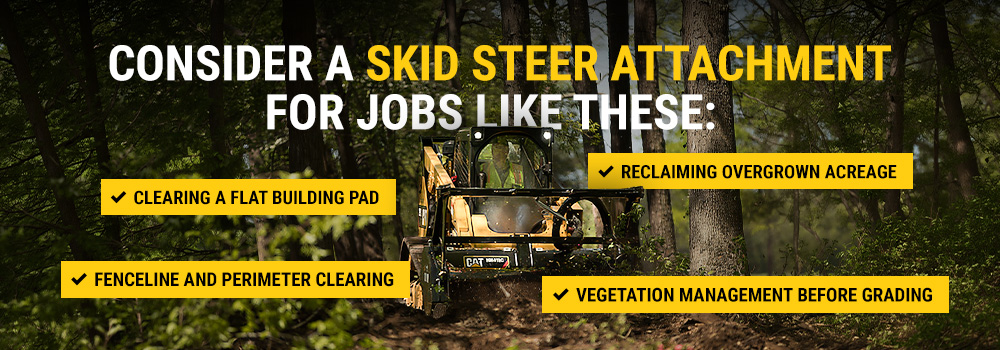
Consider a skid steer attachment for jobs like these:
- Clearing a flat building pad: Sites prepping for foundation work benefit from the ground-level speed that a skid-steer mulcher delivers. Your crew can clear and move on to grading without waiting for a separate clearing contractor.
- Reclaiming overgrown acreage: Landscaping and development projects on accessible terrain move quickly with this setup.
- Fenceline and perimeter clearing: Open ground allows the equipment to sweep back and forth across long stretches. This works especially well on properties with long, uninterrupted boundary lines.
- Vegetation management before grading: If you plan to use the same skid steer to handle grading afterward, mulching first means you can use just one piece of equipment.
You can rent a skid steer loader with a forestry mulcher attachment already paired or add the attachment to equipment already on your site. You can also use a compact track loader in place of a skid steer loader, especially on sites where the ground is wet.
Excavator Mulcher Attachments
An excavator mulcher attachment mounts to the end of the excavator arm. This differs from the front-mounted setup used on a skid steer. It lets the operator position the cutting head well beyond the equipment’s immediate footprint. It can reach above, below and around obstacles that a skid steer setup would struggle to access. The extended reach and stability open up terrain that would otherwise require the carrier itself to enter risky ground.
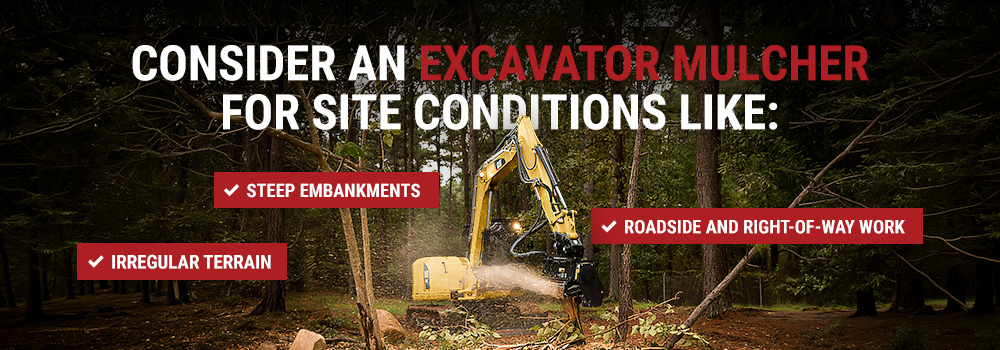
Consider an excavator mulcher for site conditions like:
- Steep embankments: Road construction projects often involve slopes that a skid steer struggles to access safely. The excavator’s arm can often reach the grade while the carrier stays on solid, level ground.
- Roadside and right-of-way work: In these jobs, the carrier can stay put on the stable shoulder while the arm swings out into the slope, keeping traffic moving and reducing disruption for passing drivers.
- Irregular terrain: Some sites are too rough for a carrier to drive into safely. They may have rock outcroppings, uneven grades and scattered debris. An excavator arm can reach in and get the job done without the equipment entering the roughest ground.
An excavator mulcher works at a more deliberate pace than a skid steer setup. The slower pace suits precision work over high-production sweeps. For instance, excavators excel in projects where a single misplaced pass could damage nearby structures or utilities. Additionally, on technical terrain, precise positioning reduces the need to reposition the carrier, improving both production and safety. Fewer repositioning moves also mean less wear on the equipment over the course of a long project.
 What Kind of Mulcher Head Are You Getting?
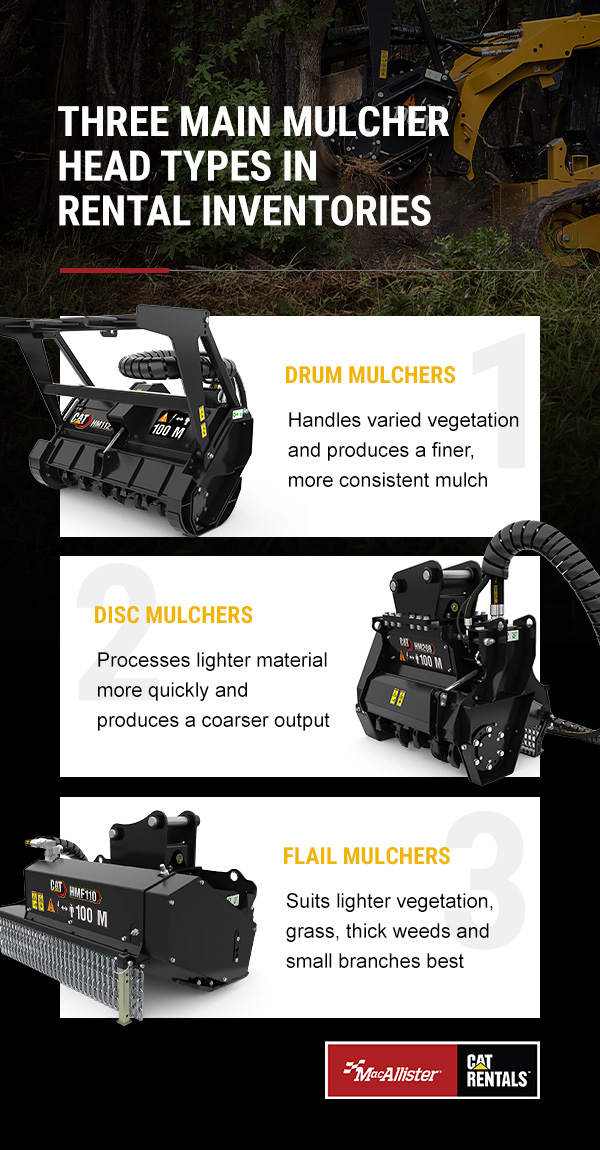
Beyond choosing a carrier, it helps to know which cutting head you’re renting. Three main types you’re most likely to find in rental inventories include:
- Drum mulchers: The most common rental configuration, a drum mulcher uses a rotating drum with teeth. It handles varied vegetation and produces a finer, more consistent mulch. This suits heavy-duty production clearing, including some standing trees, thick brush and below-grade stump work.
- Disc mulchers: A disc mulcher features a large, heavy, horizontal spinning steel disc with teeth around its perimeter. It processes lighter material more quickly than a drum mulcher and produces a coarser output, making it ideal for sites with less dense vegetation.
- Flail mulchers: A flail mulcher uses loose, swinging hammers or knives instead of rigidly mounted teeth. It suits lighter vegetation, grass, thick weeds and small branches best. When a hammer strikes a hidden rock, the flail swings back to absorb the shock. This protects the drivetrain from stalls.
Knowing these differences ahead of time can help you ask the right questions when browsing rental inventory. It also helps set realistic expectations for production speed and finished mulch quality on your specific job.
Other Factors to Consider
If you already have carrier equipment on your site, renting the correct attachment is usually the natural, lower-cost choice. Without a compatible carrier on hand, renting an excavator or a skid steer with a forestry mulcher is the only choice. Many rental companies carry both the attachment and the carrier it mounts on, which simplifies logistics considerably.
Hydraulic compatibility deserves a prerental check every time. The attachment you rent must match your carrier’s hydraulic flow range and pressure rating. A mismatch here can lead to poor performance or equipment damage. A quick conversation with your rental provider usually clears up compatibility questions before equipment leaves the yard.
Project timeline and task overlap matter too. Your skid steer attachment gives you more versatility, as the same equipment can handle grading or material handling later. Rental providers carrying a full range of compact equipment make it easier to build a complete package. Consolidating multiple pieces of equipment under one provider can also simplify billing and delivery scheduling.
Is Renting the Right Call? Renting vs. Hiring a Mulching Contractor
Both renting and hiring a mulching contractor have their place. The right answer depends on your project duration and your crew’s experience. Site conditions and the daily cost math also play a role. Neither path is automatically the smarter choice.
When Renting a Forestry Mulcher Makes More Sense
Renting tends to be the stronger financial and logistical call under certain conditions.
- Your crew already has operating experience: Familiarity working with mulchers mounted on skid steers or excavators removes the learning curve associated with unfamiliar equipment. Your operators can start producing from the first hour instead of spending time getting comfortable with the controls.
- The job spans multiple weeks or projects: Renting starts to make more financial sense once the daily cost spreads across enough acres. Most equipment rental companies charge lower daily rates the longer the rental period.
- You want to keep the job in-house: Handling the job in-house keeps the margin that would otherwise go to a contractor’s markup. That margin can matter significantly on larger acreage projects.
- Scheduling flexibility: Contractor availability often tightens during peak land-clearing season, which can delay your project. Renting puts the schedule back in your hands rather than in a contractor’s queue.
Renting can protect your margins and keep control of your schedule in your hands. It also helps you avoid an unplanned equipment purchase. For contractors who regularly take on similar work, renting offers a chance to test attachment types first. That trial run helps before committing to a permanent fleet purchase. It’s a low-risk way to build hands-on experience with different carriers before committing long-term.
When Hiring a Contractor Makes More Sense
Hiring a mulching contractor becomes the smarter move under a different set of conditions:
- Short-duration jobs: For short jobs, hiring a professional operator is often more cost-effective than rental logistics. Delivery, pickup and setup time all factor into the true cost of a short rental.
- Limited crew experience: The learning curve on unfamiliar equipment costs time and risks equipment damage. A dedicated operator already knows how to read vegetation density and adjust technique on the fly.
- Hard deadlines: A tight deadline where production risk runs high also favors bringing in a specialist. An experienced operator reduces the chance of costly delays.
- Technical terrain: Extreme slopes or very soft ground call for an experienced, dedicated operator who has handled similar conditions before.
- Purpose-built equipment needs: Some projects require dedicated, high-horsepower mulching equipment that goes beyond what an attachment can handle. Large-scale forestry or land management work often falls into this category. This especially applies when the vegetation is dense or the acreage is extensive enough to justify specialized equipment.
An experienced contractor brings more than just equipment to a technical job. Years of hands-on experience reading terrain, vegetation type and density and identifying hazards often pay off. Production tends to run faster and safer than when working with a crew facing similar conditions for the first time.
What Does It Cost to Rent a Forestry Mulcher?
Forestry mulcher rental costs vary based on factors such as the attachment model, its size and rental duration. Understanding these variables up front makes it easier to budget accurately before a project starts. It also helps you compare quotes from different providers on a level playing field.
For example, longer rentals typically come with better daily rates. Providers often build in a discount for extended use, rewarding contractors who commit to multi-week rentals.
Seasonal timing can affect pricing, too. Rental demand generally runs lighter during the winter months than during the peak spring and summer construction seasons. Your location plays a role as well. Urban and suburban markets tend to see higher rates than rural areas.
Be sure to budget for the attachment and carrier if necessary, and factor in delivery and fuel costs where they apply. These additional line items can add up quickly on a longer or more remote project. Contact a reliable rental provider directly for current pricing on your specific job and location.
Costs of Hiring a Forestry Mulcher
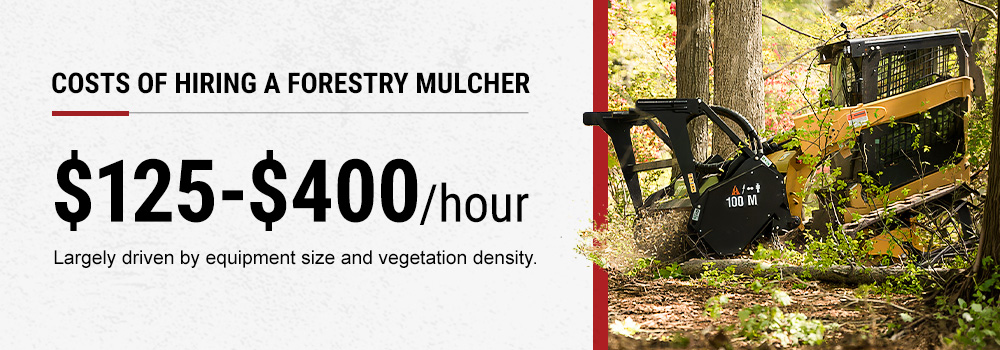
Contractors typically bill for mulching work by the hour, by the acre or by the day. Hourly rates commonly range from $125 to $400, largely driven by equipment size and vegetation density. Per-acre rates usually fall between $400 and $2,000. Difficult terrain or small lots can push that past $3,500. Daily rates, often including both operator and equipment, typically land between $1,000 and $4,500. Most contractors also add a mobilization fee of $150 to $600 for loading, transporting and unloading equipment.
To get the best deal, collect written, itemized bids from at least three companies before choosing one. Each bid should spell out the scope of work, the equipment and crew size and the project timeline.
It should also cover what happens to the mulch once the job wraps. Round out each bid with the total cost, any added fees and any guarantees on the work. Confirm that the contractor carries liability and workers’ compensation insurance. Insurance protects you if someone gets injured or property gets damaged. Taking these steps up front helps you compare bids on a level playing field, rather than by price alone.
What a Good Rental Company Should Provide
First-time renters and repeat customers alike deserve a consistent standard from a quality rental company. Knowing what to expect going in makes sizing up a provider a lot easier.
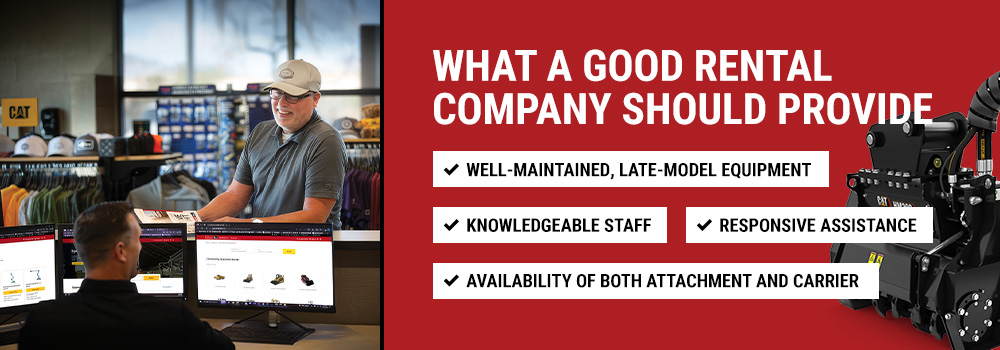
- Well-maintained, late-model equipment: Equipment and attachments should be ready to work the moment they arrive on-site.
- Knowledgeable staff: A good team helps match the right attachment to your carrier and job scope. They offer guidance rather than just handing over equipment. Their experience with similar projects can also direct you toward the best setup for your job.
- Availability of both attachment and carrier: A complete rental package saves you the trouble of sourcing equipment from multiple providers.
- Responsive assistance: Support during the rental period helps prevent a minor issue from becoming a bigger delay. A quick response to a question or a swap request keeps your project on schedule.
These standards apply whether you’re clearing a single lot or managing vegetation across multiple properties.
Access High-Quality Forestry Mulchers at MacAllister Rentals
A forestry mulcher clears land and manages vegetation in one pass. The best attachment depends on your site conditions and production needs. Whether the job calls for site prep, vegetation management or right-of-way work, the setup matters.
Skid steers and compact track loaders excel on open ground, while excavators reach into slopes and tight spaces. The choice to rent usually hinges on your timeline, crew experience and the cost math across the job. If you’ve decided renting is the right call, MacAllister Rentals makes the next step straightforward.
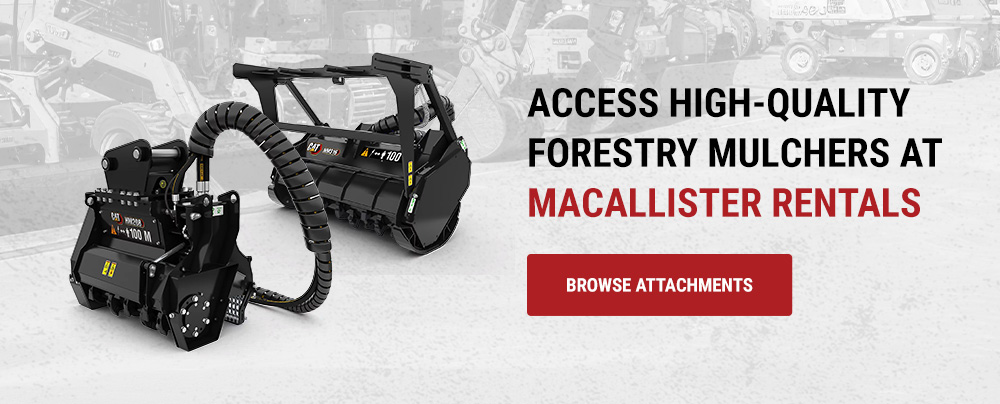
We offer high-quality equipment rentals from some of the best brands in the business, including Caterpillar, JLG, Genie, Vermeer and Toro. You can find Cat® skid steer and excavator mulcher attachments for rent at numerous locations across Indiana and Michigan’s Lower Peninsula. With over 80 years of equipment experience and top-notch service and support, MacAllister Rentals has built a reputation for reliability. Browse our forestry mulcher attachments, or contact us to confirm availability and pricing.
A forestry mulcher shreds trees, brush, stumps and other woody debris into mulch on-site. It can help with land clearing, site preparation and vegetation management without hauling all the material away. The right choice depends on the size and conditions of the site, how long the work will take, your budget and your crew’s experience with the equipment. Compare the full cost of renting and operating the equipment with a contractor’s quote, including the time and skills your crew can commit to the job. A skid steer mulcher is suited to flat or gently rolling ground. An excavator mulcher can be a better fit for steep slopes, rough or uneven terrain, and work that calls for added reach or precision. Forestry mulchers can be mounted on skid steers, compact track loaders and some small or medium excavators. Compatibility depends on the attachment and carrier, so confirm the carrier’s specifications with MacAllister Rentals before booking. Rental pricing varies by equipment and rental duration, and rates can change. Contact MacAllister Rentals for current pricing and availability for your project. Contractors commonly charge $125 to $400 per hour, $400 to $2,000 per acre, or $1,000 to $4,500 per day, often including the operator and equipment. Difficult terrain or small lots can push per-acre pricing above $3,500, and mobilization fees may add $150 to $600. These are typical ranges, not a quote. Compare written, itemized bids that spell out the work, equipment and crew, timeline, mulch handling, extra fees and insurance.Frequently Asked Questions
What does a forestry mulcher do?
Should I rent a forestry mulcher or hire a contractor?
Which forestry mulcher attachment is right for my project?
What equipment can run a forestry mulcher?
How much does it cost to rent a forestry mulcher?
How much does it cost to hire a forestry mulching contractor?