Many landscaping businesses face similar pressures — how to take on more jobs, finish them faster and keep costs down while the competition does the same. Meeting that demand starts with having the right equipment at the right time without the capital expense that eats into your margins.
Strategic rental planning gives you that edge. You can scale up for big projects, tackle specialized work and keep crews moving without owning every piece of equipment you might need.
Jump to Section:
- How Strategic Rentals Boost Your Landscaping Business
- Four Smart Reasons to Rent
- Essential Rental Equipment and Attachments for Landscapers
- Why Your Rental Partner Is Important
- Get Started With MacAllister Rentals
How Strategic Rentals Boost Your Landscaping Business
The landscaping industry topped $188.8 billion in 2025, employing over 1.4 million workers across the country. In that competitive environment, successful companies operate and adapt efficiently. For most landscaping operations, the biggest concerns are finding qualified employees and maintaining profits.
Building a smart equipment rental strategy can drive growth. When you rent instead of buy when possible, you free up capital for other growth activities:
- Marketing campaigns that bring in new clients
- Hiring additional crew members to expand capacity
- Training programs that improve productivity
- Service area expansion into new territories
Every dollar tied up in equipment down payment could be driving growth somewhere else in your business. Research shows that a hybrid strategy of buying and renting optimizes financial performance and operational efficiency. You own your core fleet while renting specialized tools, backup capacity and seasonal equipment.
Renting equipment can make managing a landscaping business easier in the following ways:
- Faster job completion: The right tool puts work on schedule. Compact track loaders grade residential lots in hours rather than days. Trenchers install irrigation lines faster than manual digging. Hand-seeding is no match for HydroSeeders. Faster completion means lower labor costs and more jobs per month.
- Lower total equipment costs: Ownership brings maintenance schedules, repair bills, insurance premiums, storage costs and depreciation. Rental equipment, maintained by trained technicians, arrives ready to work and goes back when the job is done. You only pay for the hours the equipment produces revenue.
- Reduced overhead and improved cash flow: For operations working on tight margins, eliminating fixed equipment costs shows up directly in profitability. Every dollar saved on equipment ownership, maintenance and storage becomes working capital you can deploy for growth. When you rent, your equipment costs scale with your workload instead of sitting as fixed overhead during slow seasons.
Four Smart Reasons to Rent
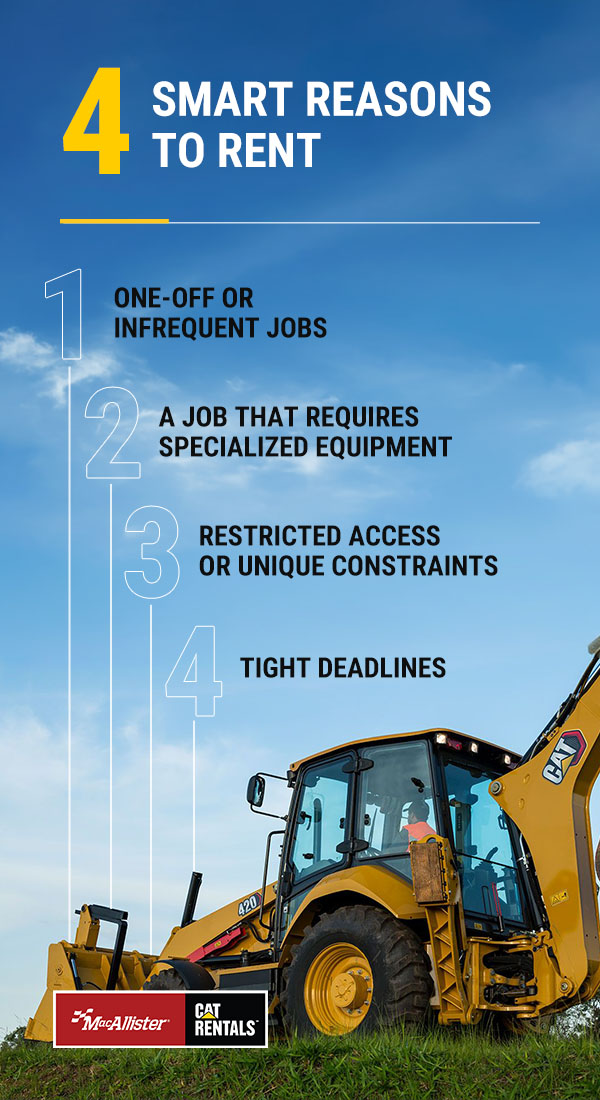 Business owners know that every equipment decision comes down to return on investment. Renting often delivers better returns than buying in these four scenarios.
1. One-Off or Infrequent Jobs
Buying a piece of equipment for a single project rarely makes sense. For example, a small-scale demolition job might require an excavator smaller than your standard equipment. A commercial planting project may call for specialized grading equipment you wouldn’t use on standard residential work. If that equipment will sit unused for months after the job wraps up, you’re paying for capacity you don’t need.
Rental equipment makes landscaping easier by giving you access without the need for ownership. You can take on more diverse landscaping jobs without expanding your owned fleet.
A tree service contract might come up once a year. Rent a chipper for that week instead of storing one for 51 weeks. Plate compactors for hardscaping work are used for three days, then returned to the rental yard. The rental cost gets built into the project bid, the client pays for the right tool and your cash stays available for recurring expenses.
2. A Job That Requires Specialized Equipment
Some projects demand tools that fall outside your typical scope of work. Decorative landscaping might require precise trenching for lighting installations. Outdoor living space preparation often involves vibratory plows for underground utilities. Unique designs sometimes call for specialized equipment that wouldn’t justify a purchase.
Rental companies maintain broad inventories specifically for these situations. Need to process brush and branches quickly? Chippers handle that work efficiently, but might only be necessary on clearing jobs. Renting lets you bid on specialty work with confidence, knowing the equipment is available when the contract starts. This expands your service offerings without the financial risk of buying tools that are used only twice a year.
3. Restricted Access or Unique Constraints
Residential properties often present access challenges that standard equipment can’t handle. Narrow side gates, mature landscaping, underground utilities and tight working spaces require compact equipment that fits the site. A standard skid steer might not clear a 4-foot gate, making a mini excavator better for tight spaces.
These site-specific challenges make rentals particularly valuable. You might own a full-size skid steer that handles 80% of your work, but residential jobs with limited access need something smaller. Renting compact equipment for those situations costs less than owning multiple sizes. If you’re deciding which loader fits your needs, rental gives you the flexibility to match the equipment to site constraints.
4. Tight Deadlines
Multiple concurrent projects or compressed timelines create temporary capacity needs that owned equipment can’t always cover. Your core fleet might be fully deployed across three jobsites, but a fourth contract starts next week with penalty clauses for late completion. Buying equipment to avoid occasional scheduling conflicts makes no financial sense.
Renting solves the capacity problem without adding fixed costs. You can temporarily scale your fleet to meet demand spikes, finish projects on schedule and avoid fines for missed deadlines on commercial or municipal contracts.
Economic uncertainty and equipment availability are major concerns for contractors in 2026. This makes having a reliable rental partner even more critical. When project delays or scheduling changes compress your timeline, rental equipment keeps work moving and protects your reputation.
Essential Rental Equipment and Attachments for Landscapers
Landscaping equipment rentals cover everything from basic site prep to specialized finishing work. Knowing which tools handle specific tasks helps you plan bids accurately and complete jobs efficiently. The right equipment often comes down to matching the task to the tool. Versatile attachments can transform equipment into multipurpose workhorses.
Earthmoving and Grading
Site preparation and grading form the foundation of most landscaping projects. The primary equipment types for this work include:
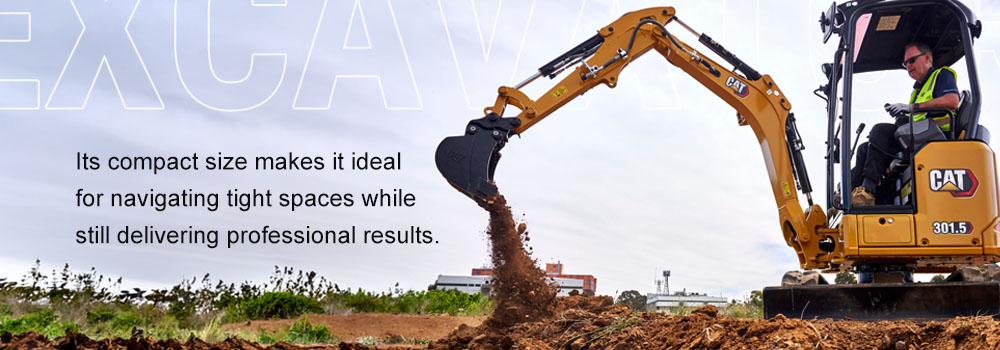
- Mini excavators: This equipment provides the digging power and precision needed for residential work, from pool excavation to foundation plantings. Its compact size makes it ideal for navigating tight spaces while still delivering professional results.
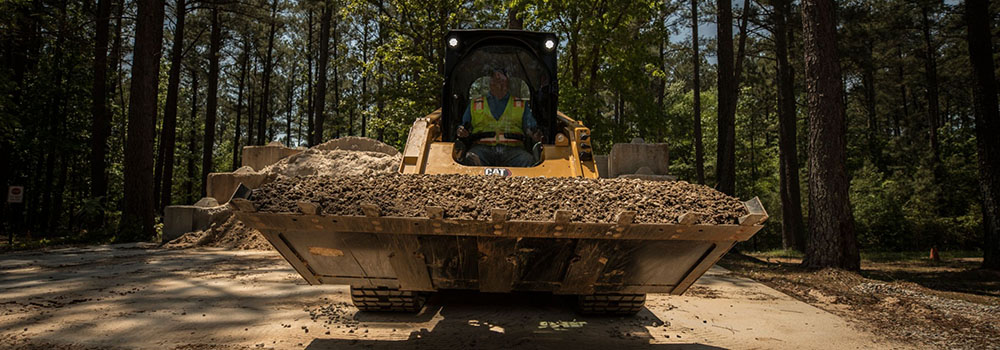
- Skid steer loaders: This equipment remains one of the most popular rentals because it accepts dozens of attachments — buckets, forks, augers and more. They handle material moving, grading and site cleanup with quick attachment changes that keep one operator productive all day. With several sizes available — from a 3,160-pound skid steer loader to the small but powerful mini electric skid steer loader — you get the job done.
- Compact track loaders: These deliver the same versatility as skid steers with better traction on soft or muddy ground. Track systems distribute weight more evenly, reducing ground pressure and turf damage on established landscapes.
- Backhoe loaders: Backhoe loaders combine digging capability with loading capacity for jobs that need both functions. They’re particularly useful on compact sites where you’re moving and excavating material in the same work zone.
- Compact wheel loaders: When you’re moving mulch, topsoil or aggregates across larger commercial sites, compact wheel loaders excel at material handling. Their bucket capacity and lift height make bulk material placement faster than skid steers on high-volume jobs.
Trenching and Installation
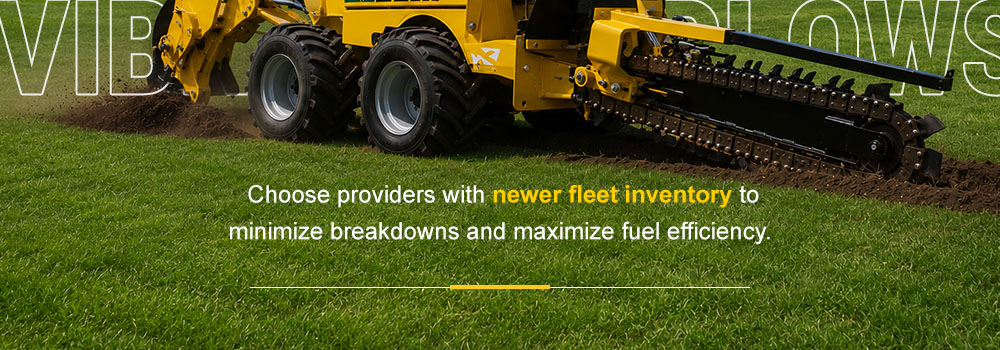
Underground installations for irrigation systems, landscape lighting or drainage require precision trenching. Walk-behind trenchers cut narrow lines for irrigation pipes with minimal surface disturbance. When installing lines underground without open trenching, vibratory plows preserve established turf and reduce restoration work. Both methods save labor costs and keep project timelines on track by eliminating the need for extensive surface repair after installation.
Skid steer attachments expand trenching capability beyond dedicated equipment:
- Trencher attachments turn a skid steer into a precision digging tool.
- Auger attachments drill post holes for fencing or arbors.
- Different bucket widths handle specific trench dimensions.
Renting attachments lets you keep labor costs down by using a single operator for multiple tasks throughout the day.
Demolition and Site Prep
Removing existing hardscaping or structures requires breaking power that manual labor can’t match. Electric and pneumatic jackhammers can easily demolish concrete patios, sidewalks and old retaining walls. For larger demolition work, hammer and breaker attachments bring that same power to excavators and skid steers. These tools are typically used most during site prep phases or renovation projects, where old hardscaping needs to be removed before new installations begin.
For occasional storm cleanups or land-clearing jobs, log splitters can quickly process wood, but do not always justify ownership. Rental ties your equipment costs to actual usage rather than owning specialized demolition tools that sit idle most weeks.
Seeding and Finishing
Establishing turf on commercial sites or large residential properties requires equipment that covers ground quickly. Aerators prepare soil for overseeding by opening the surface and improving root penetration. Then, in a single pass, HydroSeeders spray seed and mulch. This process dramatically reduces installation time compared to traditional broadcast seeding.
Lawn vacuums handle fall cleanup or post-construction debris removal efficiently. Chippers process brush and branches into usable mulch. These finishing tools typically see seasonal demand rather than year-round use, making rental the smart financial choice. You can schedule the equipment exactly when it’s needed, without carrying ownership costs through slow months.
Why Your Rental Partner Is Important
Choosing where to rent matters as much as choosing what to rent. Equipment reliability, support and partnership approach affect your projects’ efficiency and profitability.
Fleet Reliability and a No-Surprises Guarantee
Downtime from broken or poorly maintained rental equipment costs you money, reputation and project momentum. Equipment that fails mid-job means paying a crew to wait, rescheduling work or scrambling for a replacement. Those costs add up quickly and undermine the financial advantage of renting.
A reliable rental fleet comes from consistent maintenance and equipment turnover. Well-maintained equipment from manufacturers like Cat® Rentals delivers predictable performance across long rental periods.
Choose providers with newer fleet inventory to minimize breakdowns and maximize fuel efficiency. Getting the most from rental equipment starts with choosing a provider whose maintenance standards match the demands of professional contractors. Equipment should show up clean, fueled and ready to work. Anything less wastes your time and money.
The Value of Local Responsive Support
National rental chains often route service calls through centralized systems that add delays and distance you from decision-makers. Local providers can respond faster when problems arise, swap equipment quickly if needed and make judgment calls that keep your project moving.
A local partner understands the specific demands of landscaping work in your region. They know soil conditions, typical project types and seasonal demands. That familiarity means better equipment recommendations and fewer mismatches between what you ordered and what the job requires. Quick access to knowledgeable support — without navigating corporate bureaucracy — makes a difference in project efficiency.
Finding an Equipment Partner
The best rental relationships go beyond transactions. A true equipment partner takes time to understand your business, typical projects and growth plans. They help you avoid common mistakes when running a landscaping business by providing equipment guidance that aligns with your project scope and budget.
For new operations, a rental partner becomes even more valuable. Startups face pressure to control costs while building credibility and a customer base. Rental equipment helps new companies compete without the capital requirements of building an owned fleet.
A partner who understands that challenge and works with your constraints makes it easier to grow sustainably. Look for a provider that treats your success as their success. They should answer questions honestly, recommend appropriate equipment and follow up to make sure the rental meets your expectations.
Get Started With MacAllister Rentals
The right rental strategy makes a difference for your landscaping business. However, the partner you choose is as important as the equipment. MacAllister Rentals brings over 80 years of experience serving contractors, landscapers and operators across Indiana and Michigan’s lower peninsula. Our rental equipment can make landscaping easier and help your business succeed.
Our fleet includes top-tier equipment from Caterpillar, JLG, Genie, Vermeer, Toro and other industry-leading manufacturers. Additionally, our inventory is maintained by highly trained technicians so you get reliable performance on every job.
Contact our team to talk through your upcoming projects. Let’s discuss how the right equipment partnership makes every job easier and more profitable.