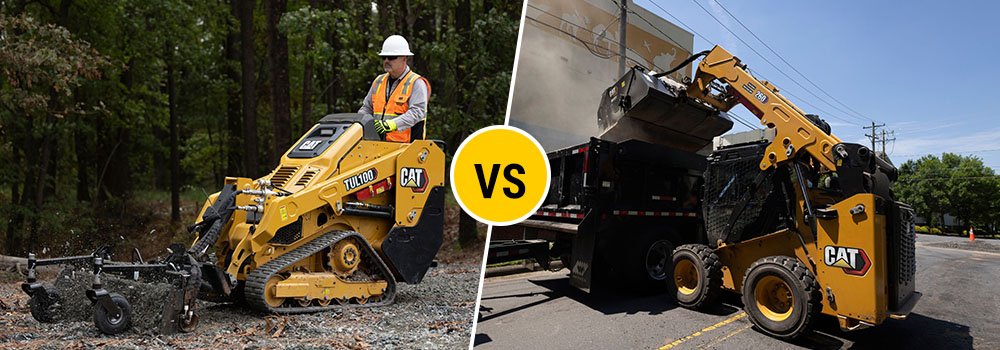
Choosing between renting a mini skid steer or a full-size skid steer can make or break your project timeline. The wrong choice means wasted rental dollars, frustrated crew members and delays that ripple through your schedule. The right one keeps your team moving efficiently and your budget intact.
Below, we explore the key differences that affect your rental decision so you can choose the right equipment for your project requirements.
Jump to Section:
- Key Differences
- Lifting Capacity
- Attachment Compatibly
- Safety Considerations
- Jobsite Needs
- How To Choose
- MacAllister Rentals Is Here To Help
Mini Skid Steer and a Full-Size Skid Steer: Key Differences
Mini skid steers and full-size skid steers both steer the same way, with independent wheels or tracks on each side that let them turn in place. The difference comes down to size, power and what they can handle.
As the name suggests, mini skid steers are compact. They fit through standard gates and doorways, work well in tight residential spaces and go easy on finished lawns and hardscaping. Full-size skid steers are larger. This extra size means more horsepower, stronger hydraulics and bigger bucket capacity, but they take up more room on the jobsite.
Ground pressure is another factor. Mini skid steers with tracks sit lighter on the surface, while full-size models press down harder. On finished lawns, decorative pavers or fresh concrete, that weight difference matters.
Power and Performance Comparison
More horsepower means faster work. Mini skid steers generally sit in the 20-35 horsepower range, while full-size models can push well past 60. That gap shows up most when loading heavy material, running augers or trenchers or digging through tough soil.
Hydraulic flow matters just as much. Mini skid steers put out less flow than full-size models, which means slower bucket cycles, less auger torque and weaker grapple force. If your project relies heavily on attachments or continuous material handling, the full-size option keeps things moving faster.
Full-size equipment also handles loaded travel better. A mini skid steer near its rated capacity slows down noticeably, especially on inclines or across larger sites. A full-size skid steer at the same relative load holds its travel speed and remains easier to control.
Fuel costs flip the other direction. Mini skid steers burn less per hour, so on shorter jobs or smaller material volumes, the savings add up. On longer, high-volume projects, the full-size model’s faster completion usually offsets the higher fuel burn.
Mini Skid Steer vs. Skid Steer: Lifting Capacity
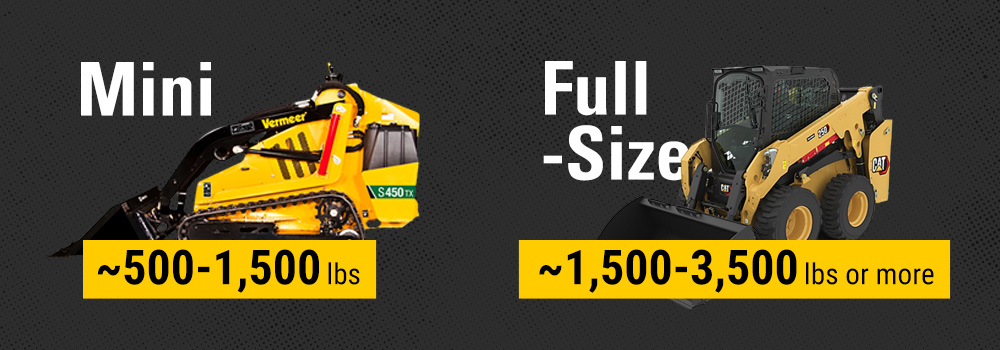
Rated operating capacity (ROC) is the maximum weight a skid steer can safely lift to full height. Mini skid steers generally top out around 500-1,500 pounds, while full-size models can handle roughly 1,500-3,500 pounds or more. That range determines how much material you can move per cycle and how many trips a job takes.
How Lifting Capacity Affects Project Efficiency
Several factors determine how efficiently each option handles material:
- Bucket size: A smaller bucket means more trips per job. Each cycle includes loading, travel, dumping and return, so even small time differences per cycle compound over a full day.
- Material type: Lightweight materials like mulch or wood chips let mini skid steers fill the bucket without hitting weight limits. Heavier materials like wet clay, sand or stone max out the bucket’s weight capacity before it’s full, widening the efficiency gap.
- Project size: A short job with modest material volumes doesn’t justify the higher rental cost of a full-size model. Once volumes climb into multiday territory, faster cycle times save real labor hours and the rental premium pays for itself.
- Operator fatigue: More cycles mean more wear on the operator. Running twice as many trips across a full workday affects both productivity and safety as the day goes on.
Attachment Compatibility and Versatility
Both equipment types use universal quick-attach mounting systems, but hydraulic requirements and weight capacity create practical compatibility limits. Understanding these restrictions helps you avoid renting attachments that your equipment can’t operate effectively.
Mini Skid Steer Attachment Options
Mini skid steers handle most standard attachments within their weight and hydraulic capacity ranges. Common options include:
- Buckets: Available in various widths and configurations. Smooth-edge buckets work well for finished grading and loose materials, while toothed buckets handle hard or compacted soil better.
- Pallet forks: Turn the skid steer into a compact forklift for moving bagged materials, supplies or other items around the jobsite, including tight spaces standard forklifts can’t reach.
- Landscape rakes: Prepare seedbeds, clear rocks and debris and handle final grading. The lighter footprint minimizes compaction on prepared surfaces.
- Light-duty augers: Handle post holes, small tree planting and sign installation in most soil types. Heavier soils like clay or rocky ground may slow performance.
- Trenchers: Cut narrow trenches for irrigation lines, low-voltage lighting or drainage. Good for residential utility work, but commercial-scale trenching typically exceeds mini skid steer capabilities.
Full-Size Skid Steer Attachment Options
Full-size skid steers handle the full attachment range, including heavy-duty and high-flow options that mini models can’t support. Common options include:
- Heavy-duty buckets: Wider buckets move more material per cycle. Specialty options like 4-in-1 designs combine bucket, clam, dozer and grapple functions in one attachment. Rock buckets with reinforced construction stand up to abusive material.
- Hydraulic breakers: Used for concrete demolition, rock breaking or pavement removal. These need both hydraulic flow and the weight of a full-size platform to deliver a consistent impact force.
- Brush cutters and mulchers: Clear heavy vegetation or grind brush. Full-size hydraulics keep the cutter head at speed under load, where mini skid steers tend to bog down.
- Cold planers: Handle asphalt removal or surface preparation. The full-size skid steer’s weight provides the downforce for proper cutting depth, something lighter equipment can’t deliver.
- Augers: Cover commercial fence installation, utility pole placement or large tree planting. The torque and stability required for these exceed what mini skid steers can provide.
Safety Considerations for Both Equipment Types
Safe operation protects your crew, prevents property damage and avoids costly incidents that affect project schedules and budgets.
Common Safety Features and Requirements
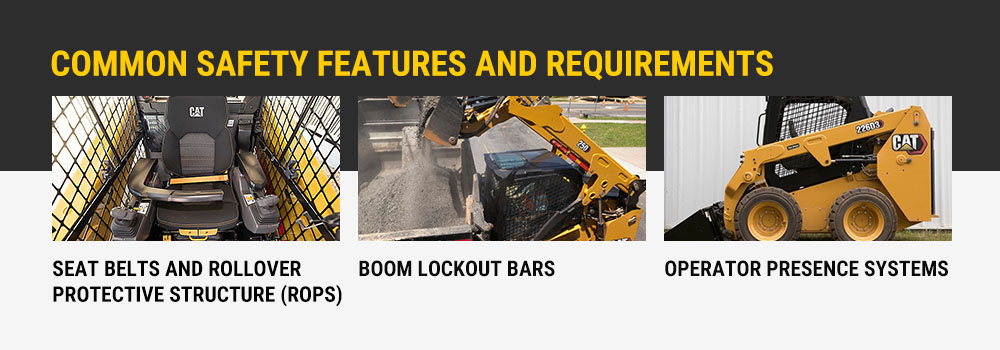
Modern skid steers come with built-in safety features, but they only work if used properly:
- Seat belts and rollover protective structure (ROPS): Always buckle up before operating. ROPS only protects a secured operator. If overhead clearance won’t allow ROPS, the skid steer isn’t the right fit for that job.
- Boom lockout bars: These prevent the lift arms from moving unexpectedly. Engage the lockout before any maintenance, attachment changes or exiting with the engine running.
- Operator presence systems: Hydraulic functions stop when the operator leaves the seat, preventing the equipment from moving on its own. Never bypass these systems.
Mini Skid Steer-Specific Safety Tips
The compact size and lighter weight of mini skid steers come with a few safety considerations. The lower operating position limits sight lines over material piles and around obstacles. Check your surroundings frequently and make visual contact with nearby workers before moving.
A lighter skid steer has less margin on slopes or uneven ground, especially when loaded. Work up and down slopes rather than across them and reduce speed on any incline.
Less weight also means quicker direction changes, which helps in tight spaces but can catch inexperienced operators off guard. Start slow and get a feel for the controls before picking up speed.
Full-Size Skid Steer-Specific Safety Tips
The extra mass and power of full-size skid steers bring their own safety considerations. More weight means longer stopping distances and harder impacts. Reduce speed in congested areas, leave extra room when traveling across the site and anticipate stops earlier than you would with a lighter model.
Stability decreases as the lift arms go up, especially with a heavy load. Keep loads low during travel, avoid sudden direction changes with the bucket raised and never drive with the arms fully extended.
The larger frame creates bigger blind spots to the rear and sides. Use spotters in congested areas, verify your path before backing up and consider backup alarms or cameras on sites with heavy foot traffic.
Which Option Works Best for Different Projects?
Jobsite characteristics determine which equipment delivers better results. Access restrictions, material volumes, surface sensitivity and attachment requirements create scenarios where one type clearly outperforms the other.
Best Uses for Mini Skid Steers
Mini skid steers are the better fit when access is tight and material volumes are manageable:
- Residential landscaping: Narrow side yards, gated backyards or established landscaping that can’t be disturbed calls for a compact footprint. Mini skid steers move material through these spaces without widening access points or pulling up fencing.
- Indoor work: Mini skid steers fit through standard doorways, handle debris removal and surface prep inside buildings and go easier on subfloors and existing finishes.
- Lawn renovation and installation: The lighter weight means less subsurface damage on properties with irrigation systems, underground utilities or finished hardscaping. The smaller frame also makes it easier to work around trees, garden beds and other features.
- Smaller jobs: For projects that wrap up in a day or two, the mini skid steer’s capacity is usually enough and the lower rental cost makes more sense.
- Light attachment work: Tasks like final grading, mulch spreading, light trenching or pallet moving don’t demand heavy hydraulic power, so maneuverability matters more than muscle.
Best Uses for Full-Size Skid Steers
Full-size skid steers earn their higher rental cost when the job demands more power, capacity or both:
- Commercial sites with open access: When space isn’t an issue and material volumes are high, full-size skid steers can get the work done significantly faster than compact models.
- Heavy material transport: Moving pallets of block, boulders or heavy components requires lifting capacity beyond what mini skid steers offer.
- Attachment-intensive work: Brush cutters, high-torque augers, hydraulic breakers and similar tools demand the hydraulic flow and platform weight that only full-size equipment provides.
- Large-scale earthmoving and grading: On high-volume jobs, the faster cycle times and bigger bucket capacity save enough labor hours to more than cover the rental premium.
- Rough terrain: Muddy sites, loose soil or steep grades challenge lighter equipment. Full-size skid steers maintain better traction and pushing power, where compact models lose grip or require multiple passes.
How to Choose Between Mini Skid Steer and Full-Size Skid Steer Rentals
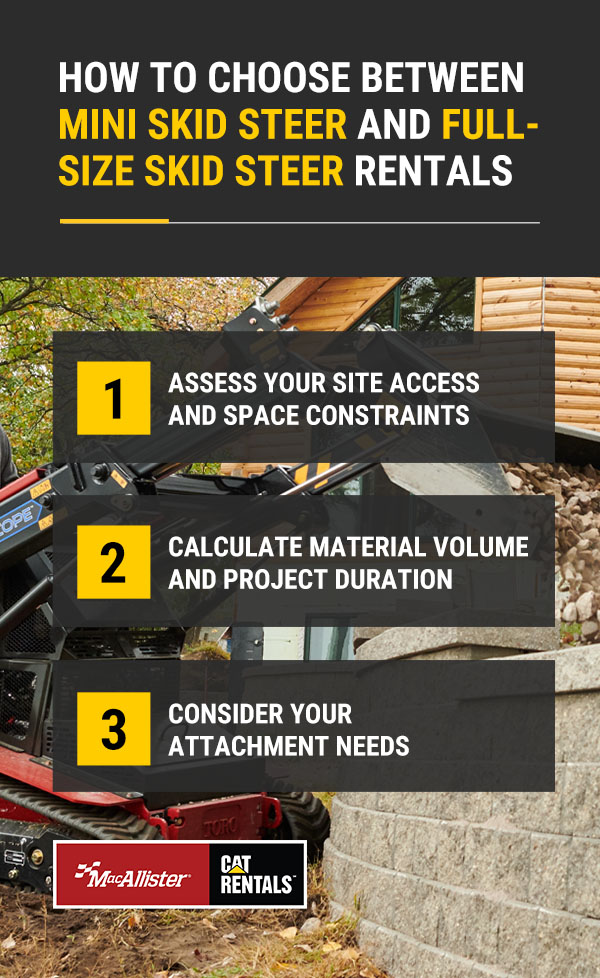 Your project’s specific characteristics should guide your decision on equipment type. Evaluating these factors systematically prevents costly mismatches between equipment and job requirements.
1. Assess Your Site Access and Space Constraints
Measure gate widths, pathways and work areas before selecting equipment. A narrow gate rules out a wide skid steer, but there’s more to consider than the entry point.
Walk the full travel path between access points and work areas. Look for tight turns, elevation changes or obstacles along the way. Corners that look fine on paper can get tight once you factor in turn radius and operator sight lines. If the path crosses soft ground, steep inclines or narrow passages between structures, those stretches may limit the size of equipment that can get through safely and efficiently.
Think about the work area itself. In a compact space, a full-size skid steer spends more time repositioning and less time actually moving material. In tighter areas, a mini skid steer’s maneuverability can outweigh the capacity advantage of a larger model. On the other hand, if the work area is wide open, a full-size skid steer has room to operate at full efficiency and the smaller footprint of a mini offers less of an advantage.
Surface protection matters too. Fresh concrete, decorative pavers or finished lawns may not hold up under heavier equipment without damage. Properties with irrigation systems or shallow underground utilities add another layer of concern. Check with property owners or project managers about weight restrictions before making a decision. In some cases, the surface alone determines which size is viable, regardless of what the job itself requires.
2. Calculate Material Volume and Project Duration
The amount of material and the length of the job help narrow the decision. On smaller projects with modest volumes, the time saved by a full-size skid steer usually isn’t enough to justify the higher rental cost. The mini skid steer handles the workload in a reasonable time frame and keeps costs lower.
As volumes increase, that balance shifts. On larger, multiday jobs, the full-size skid steer’s bigger bucket and faster cycle times start saving significant labor hours.
3. Consider Your Attachment Needs
Think through which attachments the job requires before choosing a size. Standard attachments like buckets, forks and landscape rakes work on both mini and full-size skid steers. If that’s all the project calls for, base the decision on capacity and access instead.
Hydraulically demanding attachments like breakers, brush cutters or large augers require the flow rates and platform weight of a full-size skid steer. If any of these are part of the plan, that settles the decision regardless of site access or material volume.
Projects that involve multiple specialized attachments also lean toward full-size. Switching between a breaker for demolition, an auger for post holes and a bucket for material handling in the same job makes the full-size rental premium worth it through sheer versatility.
Rent the Right Skid Steer for Your Project
MacAllister Rentals offers both mini and full-size skid steers to meet your project requirements.
We’re a Cat® dealer that supplies quality equipment to locations in Indiana and Michigan’s lower peninsula. Our specialists help you evaluate site access, material volumes and attachment needs to select the most cost-effective option for your specific application.
Contact MacAllister Rentals today for more information on choosing the right equipment for your next project.